
If the mixed reception to Bloober Team’s recent output signified anything, apparently it was that they were due for a hit. Silent Hill 2 is terrific, easily able to stand among the benchmarks of big budget horror games, with an unconventional story, tight combat, and some truly outstanding sound design. It’s a home run for a team that had become somewhat beleaguered in the public eye over the last few years, a reputation that I cannot imagine will persist after this release.
Part of what makes Silent Hill 2 so exciting is that it offers an experience that is markedly similar to Capcom’s recent output of Resident Evil games but is also freed from some of the constraints and conventions that define the latter. For one, the game’s narrative never boils down to mysterious viruses and shadow organizations, instead dealing with heavy themes in an intensely personal story. Here, a sullen James Sunderland descends into the town of Silent Hill, Maine after receiving a letter from his deceased wife, beckoning him to come find her. Along the way he meets a small cast of characters who have also come to Silent Hill in various states of delirium in order to excavate their own traumas and demons. Their interactions with James are brief but memorable, with well-delivered performances and slow, dreamy cutscene direction. I came to appreciate the story most when things wrapped up at the end in a way that recontextualized a lot of what came before, and it’s really impressive how the ending is influenced by many subtle actions the player may or may not do over the course of a playthrough.
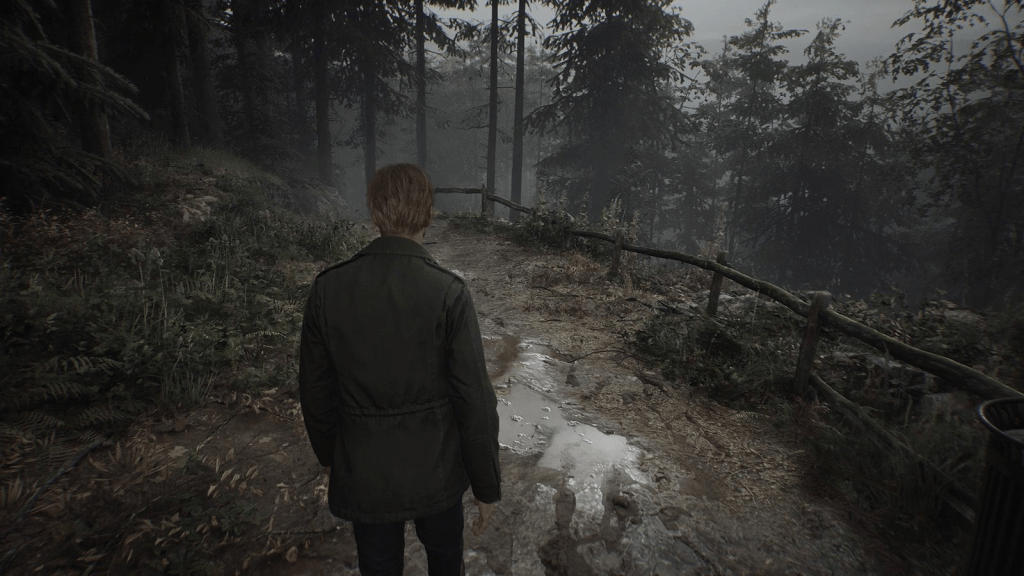
Silent Hill 2 also breaks from conventions by not having any inventory management to speak of, a surefire win for anyone needing a break from the typical white-knuckle inventory tetris of the genre. James carries a melee weapon, three firearms, and two different healing items over the course of the game and everything can be freely stocked up as much as possible. That isn’t to say that resources are as plentiful as an all-out action game–you’ll still need to pick your shots and, ideally, get comfortable with the melee system to conserve ammo whenever you can. But I did feel like I could be a bit more free-wheeling with consumables than I do in other horror games, at least on the standard difficulty.
The melee system is a bigger deal than it initially seems, and it’s actually pretty decent. You only have one attack and a dodge, but the game does a great job of framing the action when engaging a foe one-on-one. There’s a solid variety to enemy attacks, even if the number of different enemies isn’t especially high. The pipe-carrying nurses can counter your swings, forcing you to be careful when engaging with melee. The mannequins can dodge and leap in from afar, necessitating careful timing. There’s another type that’s easy to kill up close but explodes upon death, meaning you’ll want to get some distance quick after dispatching them.
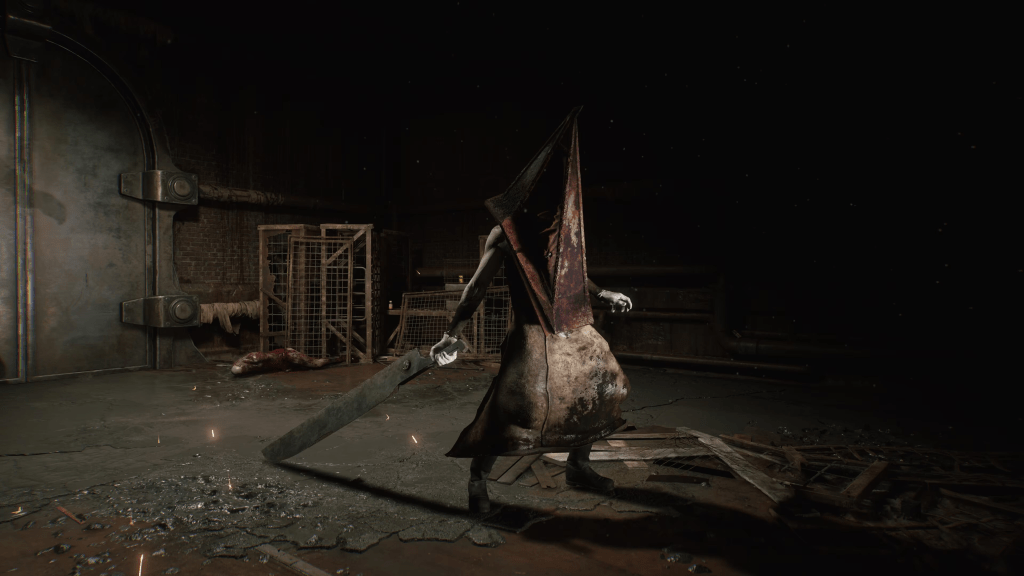
It was a satisfying challenge having to size up my opponents when going in for a melee kill, and understandably tense whenever a second or third foe got mixed in with very different attack patterns. I found using firearms and melee interchangeably to be a good tactic in some fights–if I didn’t feel confident enough to go full-melee but also didn’t want to use too much ammo, I might pop a couple shots into an enemy and then rush in to finish them off with a solid swing of the pipe wrench. Crucially, you can cancel out of melee attacks to perform a dodge, letting you stay on your toes.
Silent Hill 2‘s puzzles offer a break in the action, and they are just as weirdly complex as you would want from this type of game. Has anyone made a game where you play as the genius tinkerer who creates these puzzles in these environments where you would least expect them? If not, someone should. This gameplay loop of navigating through a level, poking into room after room collecting strange, seemingly unrelated items that will eventually engage some kind of centerpiece puzzle, is a very tried and true system and I cannot get enough of it. Silent Hill 2‘s puzzles were satisfying to complete, and Bloober Team helpfully included three different puzzle difficulty options that determine the clarity of hints and clues the game gives you. More of that, please.
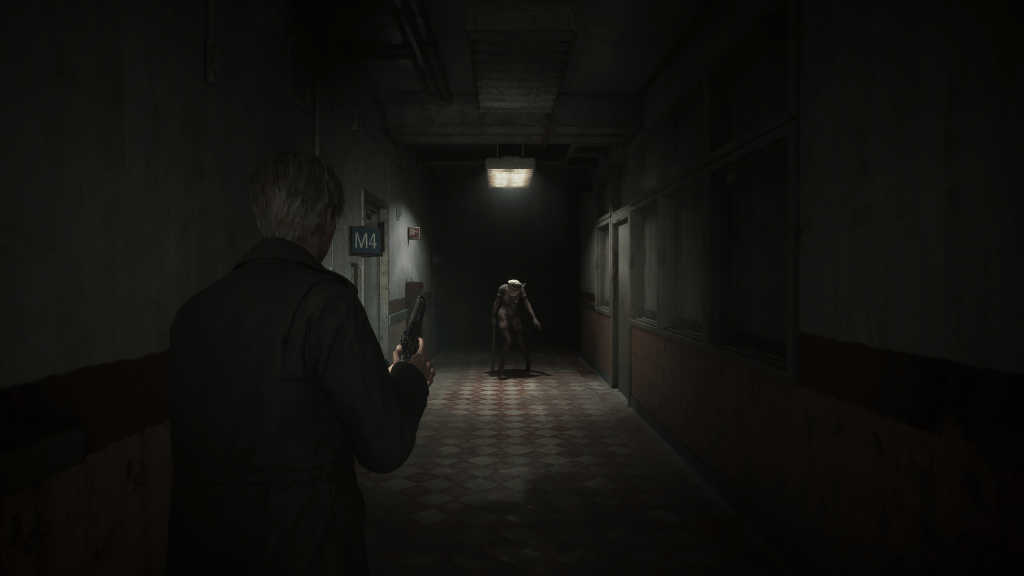
The game’s levels are well-designed, with complex layouts and many, many rooms to search through. As you encounter locked doors, clues, and impassable obstacles, the game automatically annotates them on the map which is supremely helpful for staying on track. But each section is big enough that I never wanted to step away mid-way through a level, lest I come back and forget what I was specifically hoping to do next.
These levels also look great and sound even better, with some truly stellar audio design and musical stingers that amplify the oppressive atmosphere. Silent Hill 2 deals more in dread than jump scares, preferring to frighten you with loud footsteps up ahead in the dark than with enemies crashing through the scenery. More than once I found myself stopping in my tracks, aiming a gun forward, waiting for whatever was making those horrible slushing, gulping, pounding noises to make itself appear, dust flittering through the air as my flashlight illuminates nothing but a few feet of ground ahead. And I wait and wait some more, and sometimes the thing never comes and I’m forced to push forward and find it myself. In this sense player and protagonist become one and the same, feeling through the dark with bated breath for something that’s equal parts real and terrible.
 Nate Andrews
Leave a comment