Originally written Feb 18, 2025.
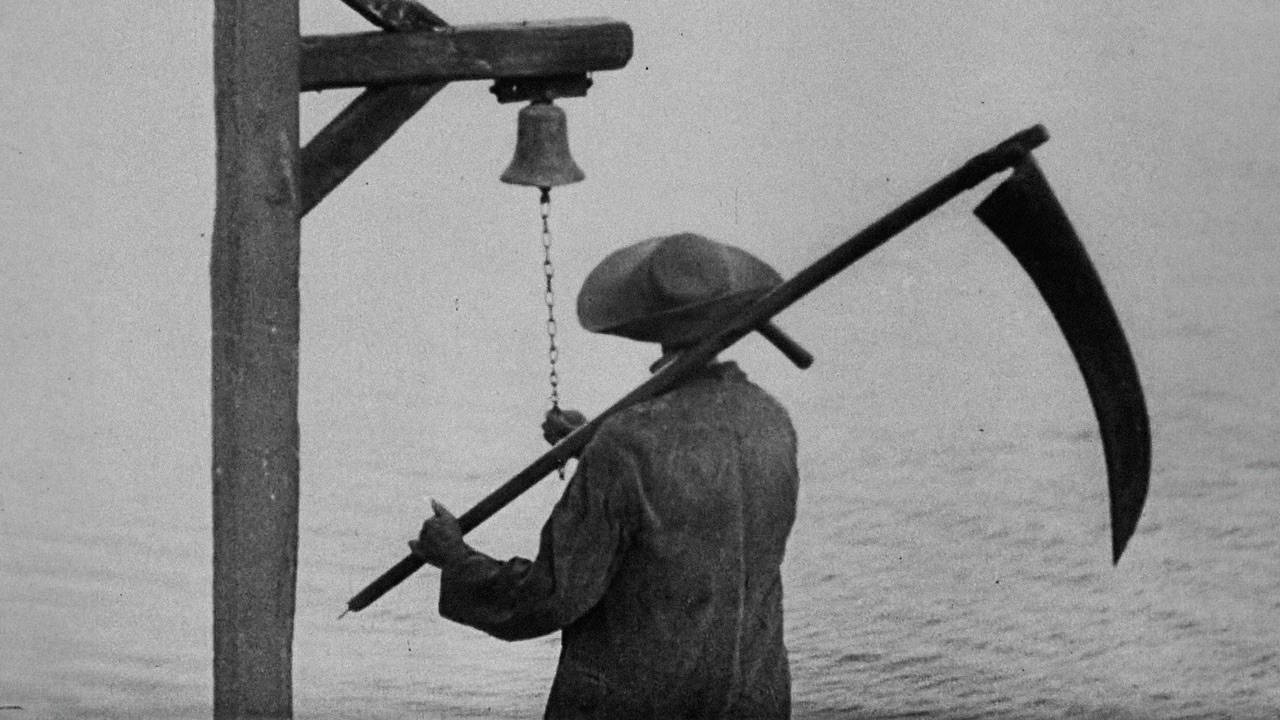
The artfully-minded trio of director Carl Theodor Dreyer, cinematographer Rudolph Maté, and art director Hermann Warm, who together had previously blown the doors off with the arresting The Passion of Joan of Arc (1928), returned in 1932 with the gothic horror piece Vampyr to a less-than-stellar reception—a sharp contrast to the praise bestowed on Joan of Arc just a few years prior. And after viewing Vampyr it’s not difficult to imagine why that might’ve been and why the film may still receive a comparatively mixed reception today. By pulling back from the intensely emotional close-ups and focused storytelling of their historical piece, this team—along with other collaborators from the Joan production—found themselves in dreamier territory.
Their talents are on display and are in fact Vampyr’s strongest element. The film is visually striking, with excellent shadow work and a soft focus visual style the defining characteristics. It’s a decidedly moody film that unfortunately never quite comes to a head. Despite its brisk 73 minute runtime, Vampyr feels languid without a clearer direction. As main character Allan Gray wanders around the vampire-afflicted town of Courtempierre and has seemingly random encounters with the weird and supernatural, it’s easy to feel just as lost. But for all the brow-furrowing confusion that comes with an initial viewing of Vampyr, there are more than a handful of memorably creepy scenes and well-constructed shots to make it worthwhile.
Vampyr also exists in the transitional period from silent films to sound films, but Dreyer elected to still rely on title cards for exposition with minimal dialogue. This was likely for the best, as the quality of acting here ranges from barely acceptable to laughably bad. But it does lend a distinct identity to the film as one deliberately chosen to be this way, rather than forced outright by the limitations of filmmaking technology.
 Nate Andrews
Leave a comment