Originally written August 17, 2025.
It feels right to have found my way to The Florida Project so soon after visiting the titular state on a road trip that had me sweltering under cloudless skies and puttering down ultrawide roadways that zoom past the palm trees and motels and chain restaurants that make up this film’s very real setting.
Everything is too big in Florida. The sky is too big. The roads are too big. The cars and trucks are too big. The parking lots and retail sprawl are too big. The trees and wildlife are too big. Everything feels outsized. As a native of Maine’s small towns, I feel dwarfed by the scale of life and all things in Florida.
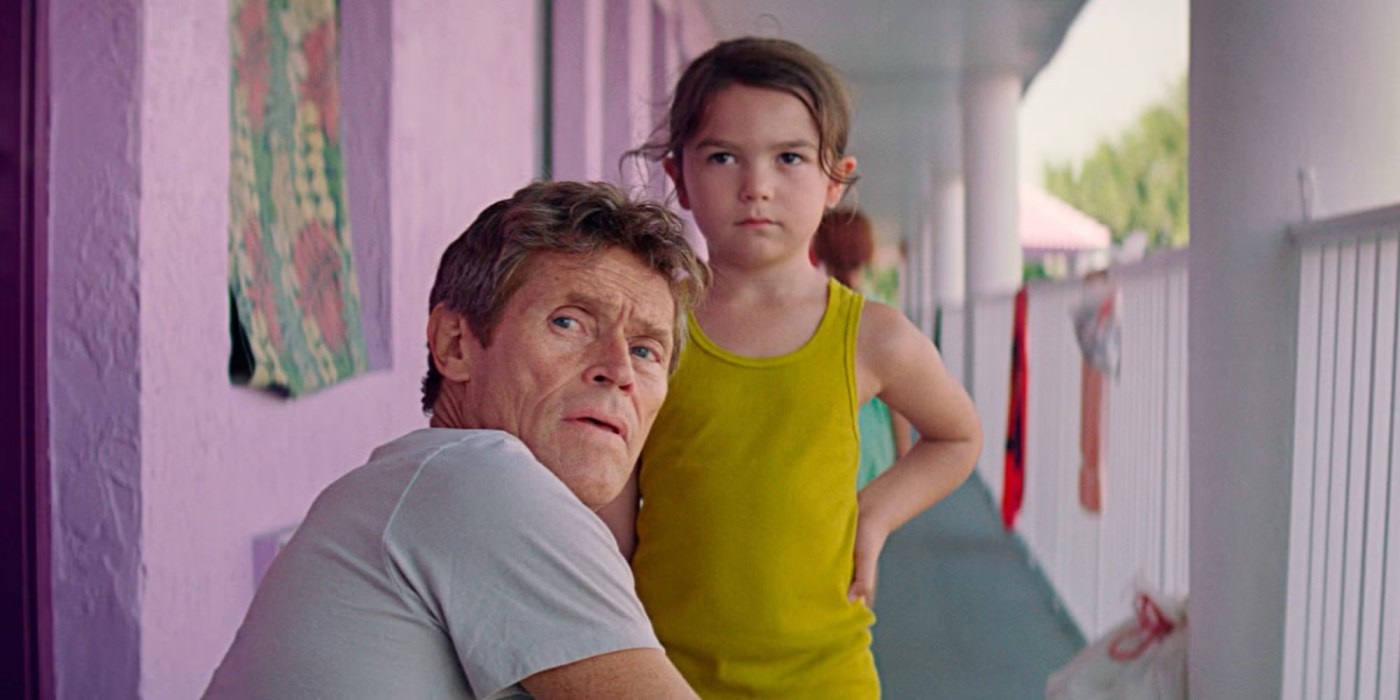
The Florida Project imagines these enormous spaces as playgrounds for the children of budget motels nestled along the highways that ferry tourists and their MagicBands to Disney World. Where director Sean Baker had previously focused his storytelling on the adults who live on the fringes of society, here the lens is on the joyous carefree ignorance of their children, who see everything as an adventure—whether it’s exploring an abandoned condo or begging for change at an ice cream stand.
The portrait painted by The Florida Project—penned by Baker and frequent collaborator Chris Bergoch and filmed beautifully by Alexis Zabe—creates a perfect juxtaposition of adventurous youth and maximally-stressed adulthood. The setting goes a long way: it’s equal parts charming and bleak watching these kids gallop across parking lots and expansive roadways, the ceaseless sounds of motors constantly in the background. You can practically smell the exhaust and feel the heat radiating off the pavement, an hour-fifty reminder that America is not built for pedestrians, nor children, nor the impoverished.
Willem Dafoe makes a surprise appearance as the down-to-earth motel manager, an uncommon level of star power for a director who typically casts unknowns in his films. The rest of the cast, adults and child actors alike, join the lineage of amazing performances that make these films so compelling and real. The central driving force is the collision between the kids galavanting through their world and the adults who are constantly teetering on the breaking point, unsure of whether they’ll make their next rent payment or be able to secure food. The Florida Project grounds itself well in its setting, allowing character arcs to play out as we become increasingly accustomed to the candy-pink motel. It’s some of the most effective storytelling in his filmography.
 Nate Andrews
Leave a comment