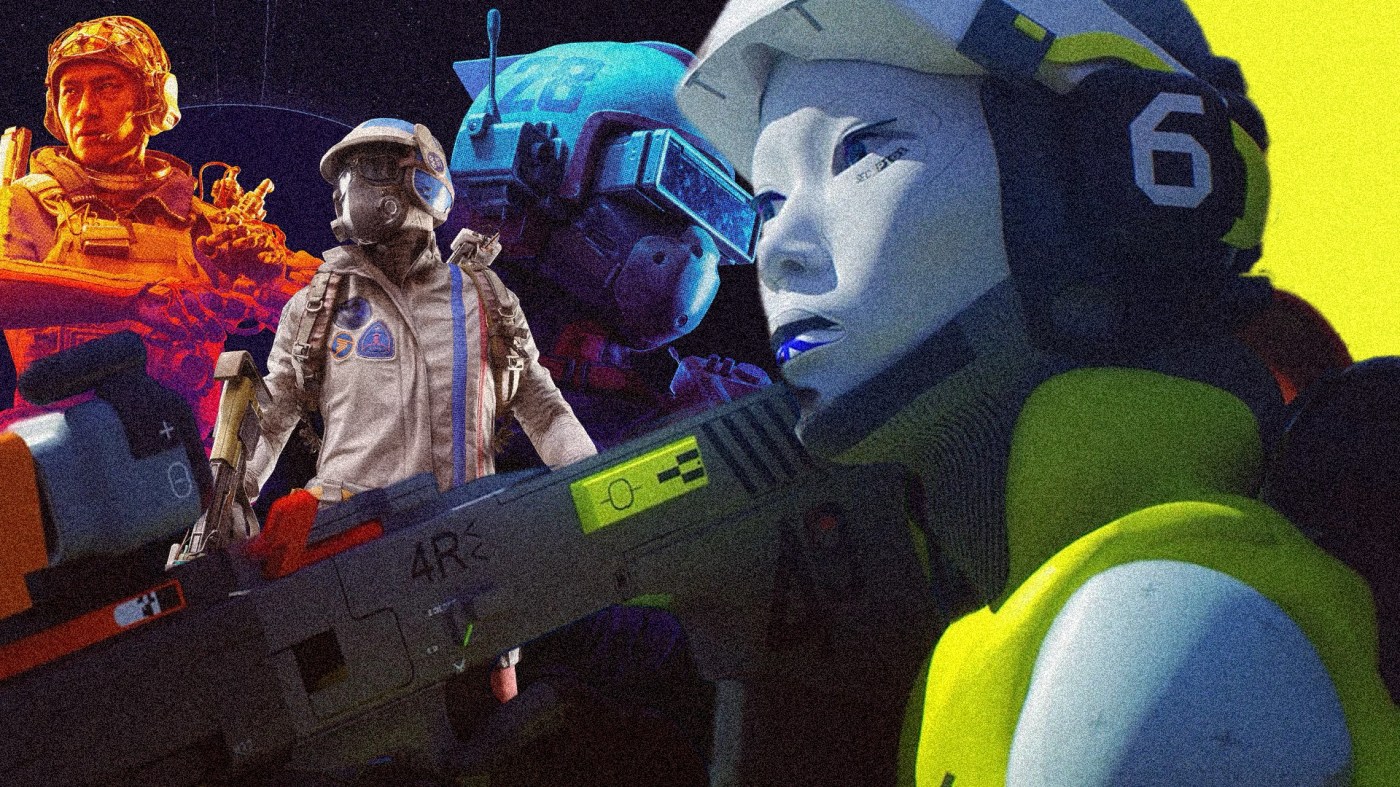
Hindsight might make it seem obvious that someone somewhere was going to crack the code on extraction shooters and take them from a niche genre to the kind of water-cooler event that multiplayer studios dream of attaining, but in an industry that’s increasingly hostile to low-performing online games and the creative people who make them you’d be forgiven for thinking this was a long shot. That didn’t deter Embark Studios and Bungie from trying and, astonishingly, releasing two of the best multiplayer games in recent memory.
The path they took to get here is worthy of another examination entirely. There’s Embark Studios, a newfound Swedish studio born in 2018 from veteran Battlefield developers, who had previously debuted with the excellent competitive shooter The Finals in 2023 and established themselves in a tricky corner of the market. And then there’s Bungie, the storied development house that reinvented console shooters with Halo and then went on to a real roller coaster of a journey with its Destiny series and brushes with independence and acquisition by larger corporations—the most recent being Sony, who purchased the Bellevue studio in 2022 for an eye-watering $3.2 billion.
Thus the two developers began their extraction shooter journeys under very different contexts. For Embark there’s the continued building of its foundation and footprint in multiplayer gaming, which is infamously fickle and lethal to studios when you least and most expect it. And for Bungie there’s an arguably more intimidating goal on the horizon: proving to its corporate owners that their billions of dollars were well-spent and that the flailing Destiny series isn’t a sign that the studio has lost their relevance.
When ARC Raiders launched to a frankly stunning level of success and Bungie issued a lengthy delay to Marathon (and found itself wrapped up in a plagiarism scandal, somehow not for the first time), it seemed the “winner” of this race had been found. The argument for ARC Raiders’ dominance only strengthened as the game continued to build in popularity after release rather than bleeding players, a trend that every studio dreams of but few achieve. The extraction shooter nut had been cracked, not by the experts at Bungie but by the ones at Embark.
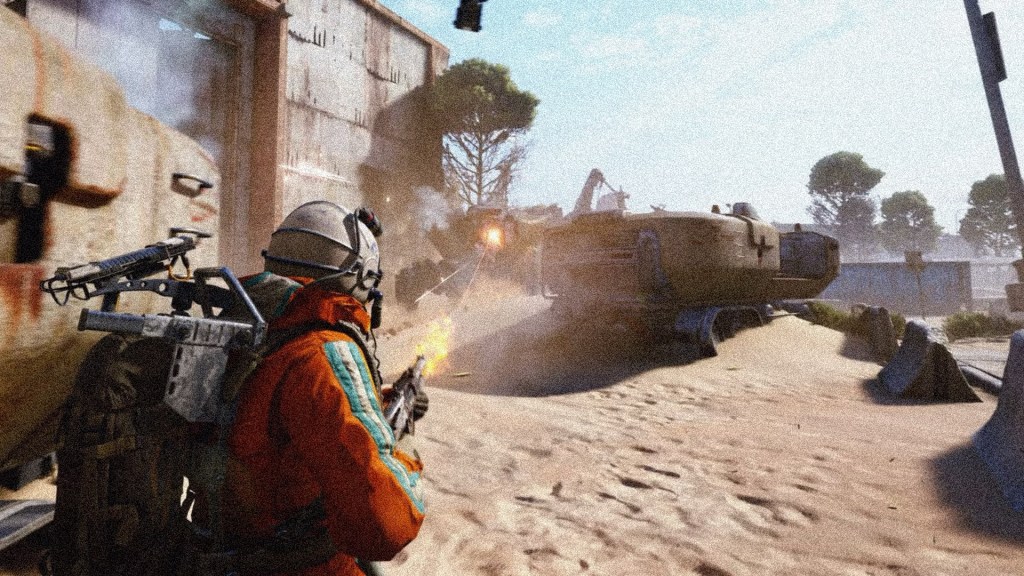
But if history is any indication you cannot count out Bungie when it comes to delivering a killer game. Marathon is unthinkably good, hitting a level of quality that’s frankly surprising not out of doubt for Bungie’s capabilities but because it really hasn’t been that long since the project was shrouded in negative sentiment. Suddenly we have not one but two outstanding extraction shooters in the public eye when previously the genre had been relegated to notoriously unapproachable games like Escape from Tarkov and steady but relatively quiet releases like Hunt: Showdown.
What’s also surprising is just how different the two games are. While the months that passed between Marathon’s delay and its release would not have been enough time to reconfigure the game along the lines of ARC Raiders in order to emulate its success, I nevertheless had an expectation that the two would be more aligned than they actually are. To be sure, the fundamentals are still much the same between the two. You put together a loadout, deploy into a map, fight AI opponents and perhaps even other players, and hopefully extract with whatever loot you’ve gathered on the run. Should you perish, all of that loot is gone. Successful extracts allow you to build up a backstock of supplies that allow for further, riskier runs, and both games give you options to get back into the fight should your inventory run dry or you wish for a lower stakes outing.
Marathon and ARC Raiders begin to diverge right away with their settings and the context that has you repeatedly braving their hostile environments. ARC Raiders’ robot post-apocalypse presents rusted and dusted-over landscapes and ruins, where a surviving community of humans try to carve out an existence in the underground city of Speranza. Raiders venture topside in search of materials that can be brought back to the city to keep things running, and the game’s quests and player projects often involve maintenance tasks like installing weather equipment and investigating water samples. Despite the harsh, almost alien-like whirring of the automatons above that roam the wastes and exterminate humans on site, there is an undeniable sense of community-building to ARC Raiders that has likely played a role in the game’s player base being as friendly and accommodating as it has been. Through all the struggles and defeats, there’s always a feeling that hope may be just around the corner.
Marathon, on the other hand, is the polar opposite, a frigidly cynical world of corporate espionage and exploitation and AI breakdowns (in classic Bungie style), where players embody “shells” that they control with their consciousness to investigate an alien world on behalf of several different self-interested factions to find out why a human settlement failed and what exactly happened to the titular colony ship sent to chart a new course for the residents of Earth. The dangers of Marathon are brutal and immediate in ways that make ARC Raiders feel passively threatening in comparison. Perhaps unsurprisingly, the lethal indifference of Marathon’s world immediately cultivated a player base that takes no chances in encounters with others.
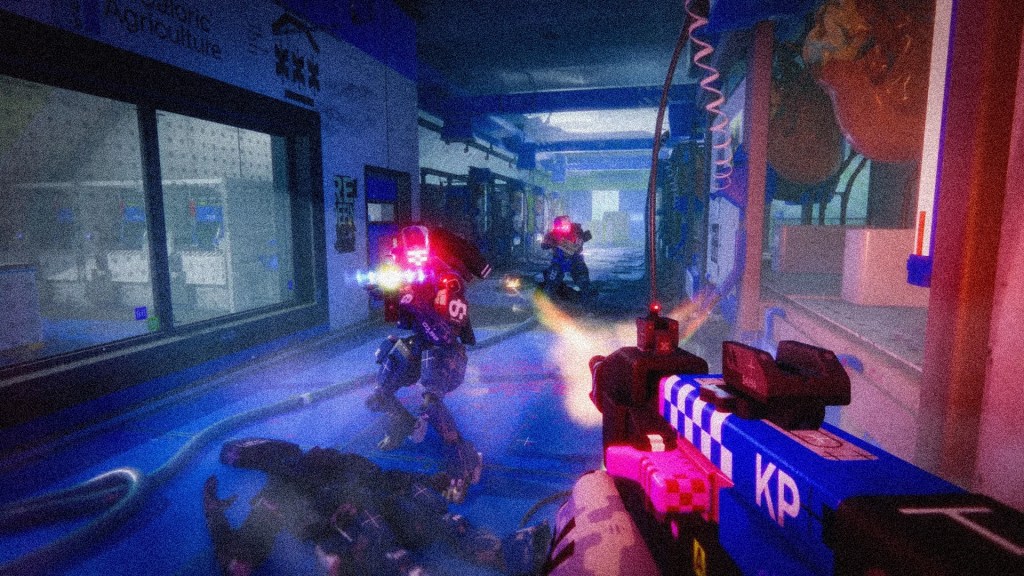
Switching between the two games brings these differences into incredibly stark relief. While you can certainly turn ARC Raiders into a more hostile experience by being aggressive yourself, therefore increasing the likelihood that the game’s matchmaking puts you together with equally trigger-happy players, it’s more likely that ARC Raiders turns into a cooperative experience so long as you aren’t going after everyone you see. Players cross open terrain without much concern for their safety, exchanging pleasantries with passers-by and perhaps even teaming up or trading items. There’s a recognition among much of the player base that the ARC robots that have taken over the surface and driven humanity underground are the real enemy here, so what are we even doing by going after each other?
But jumping over to Marathon as a largely passive ARC Raiders player is some serious video game whiplash. In my 20 plus hours of playing I’ve not heard a single player in proximity chat, not seen one person spamming crouch or toggling a flashlight to signal good intent. It’s shoot on site, always, every time, no matter what. And the thing is, it feels appropriate in Marathon. I’m not embarking on a run to bring back supplies to build a medical station in a survivor settlement. I’m not heading out into the world to collect berries for a holiday feast designed to bring light and warmth back into people’s lives. I’m not even beaming down to this planet as myself in the first place, but rather as a manufactured body that is entirely disposable, and I’m doing it on behalf of factions that promise to shower me in guns and defensive augments if I further their interests. Maybe I’m harvesting some bio-samples for the consumer goods mega corporation NuCaloric or doing work for the industrial mining company Traxus. I might even be heading out on behalf of Arachne, a cult-like organization that directly incentives me to attack other players.
There’s also a pretty clear difference in attention paid to the narrative in each games. ARC Raiders’ story is for the most part just there, existing to give some context to everything but largely stepping aside so player-driven stories can outshine it. In contrast the story of Marathon is baked into the core experience, with tons of fantastic lore entries delivered in that classic Marathon green terminal text, and the factions are represented by some unforgettable and amazing leader designs (maybe less so the rebellious MIDA representative who is given an aesthetic I can only describe as Watch Dogs-core). It’s overflowing with style, and the way the game teases out its mysteries by steadily unlocking these bits of story and rolling out weekend expeditions to the titular ship are really engaging.
You also see the divergence between the two games in how differently they play, from the moment-to-moment combat and exploration to what you’re doing outside of runs. These are both extraction shooters but they almost don’t feel like they belong to the same genre, excellent proof that there’s a good amount of variety to be found in this type of game.
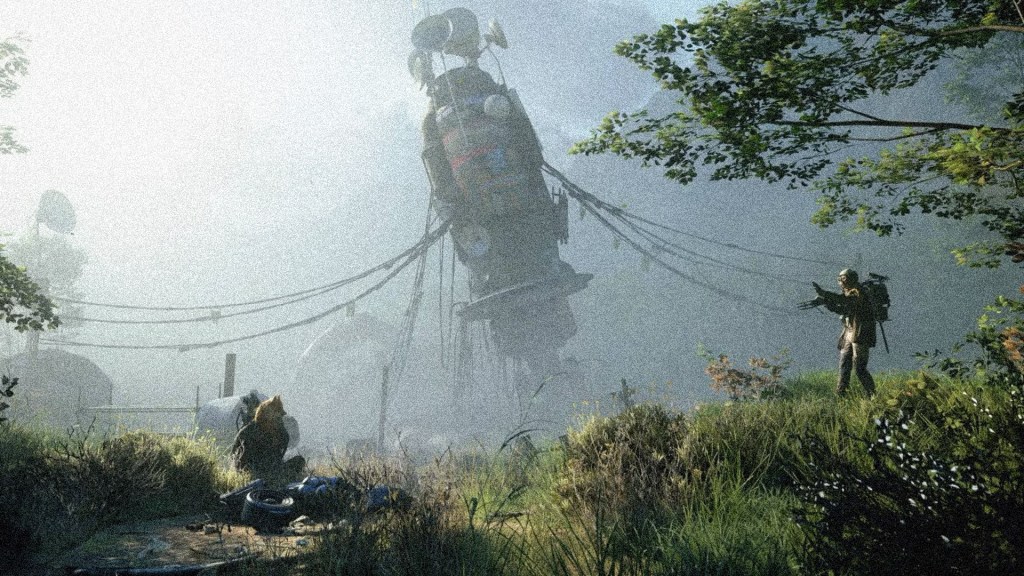
ARC Raiders leans far more heavily into the exploration side of things, so much so that it’s possible to complete an entire run without firing a single shot. The maps are enormous, filled with buildings and underground areas to explore, littered with pathways that twist and turn and elevation changes that make the spaces feel even more dense. An entire outing can be spent just looting one or two locations, running the clock down as you scavenge every locker and drawer in site for components and materials. The expansive maps make encounters with other players feel like they’ve happened by chance, and also give you plenty of opportunity to be caught out in the open by a robot that knocks you out in the blink of an eye if you aren’t careful.
Marathon is more of a straight-up first-person-shooter where you almost can’t get anything done without a direct fight. The maps are notably smaller and less dense than in ARC Raiders and more oppressive as well. Nothing happens by chance in Marathon—if you’re heading to a named location on the map you better believe it will have UESC robots ready to annihilate you in an instant, not to mention at least one if not several players who will also be looking to do the same.
Combat pacing also feels drastically different between the two. ARC Raiders made an impression right out the gate with its unpredictable enemy AI behavior, where damaged flying drones appear to relearn how to fly to continue the fight and the arachnid Leaper enemy takes enormous flying leaps, ragdolling itself at players in sometimes comical, sometimes frightening fashion. But the ARC robots also tend to telegraph their attacks, making them easy to anticipate and even dodge.
Marathon’s AI behavior feels largely in line with what Bungie has done in the past, with enemies employing lots of strafing, dashing, flanking, and the same active camo that you just know this studio can’t ship a game without. The AI in ARC Raiders was so revelatory that I initially had worries Marathon would feel rote by comparison, but the UESC bots move with an intimidating and frenetic energy that, when combined with the sheer power of their damage output, make them really engaging and satisfying to fight against—even more so thanks to that incredible feeling of playing any Bungie shooter. Their games feel so good.
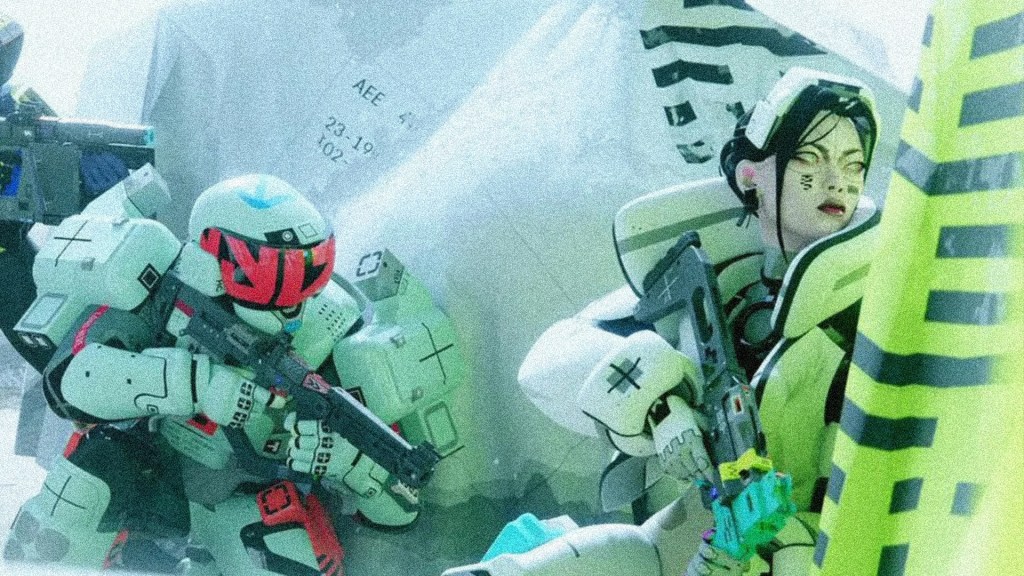
ARC Raiders and Marathon engage the player differently outside of runs. Where ARC Raiders is heavy on the crafting, requiring that you spend a decent amount of time between each outing making and repairing equipment (a sometimes-lengthy process that has been recently sped up with a nice quality of life patch that reduces the amount of menu-hopping needed), Marathon is determined to get you back to Tau Ceti IV quickly. There is no crafting to be had, instead opting for a highly generous doling-out of weapons and equipment from its six factions. A death in ARC Raiders could mean losing gear that took time and effort to craft, or a weapon that you only found once in a few dozen hours of play, which can be heartbreaking (at least until you’ve gotten over the notoriously deflating “gear fear”). Defeat in Marathon, so far, hasn’t meant all that much beyond knowing that you’ve just cleared up some space in your restrictively limited vault, even more so since many faction contracts don’t even require you to exfil to be considered successful.
It’s been equal parts exciting and a relief to see both ARC Raiders and Marathon chart their own paths forward in the extraction shooter genre, and jumping between the two highlights some lessons I would love to see the games learn from each other.
For ARC Raiders, I would love to see PvP incentivized just a bit more. Not in an over-aggressive way that turns the game into a total free-for-all, but just enough to bring back that uncertainty from the early days of the game when players called out to each other from around corners, guns drawn, hoping to draw out the others’ intent. I want player footsteps to be a nerve-wracking noise again. You could always try to force your way into these sorts of lobbies by influencing the aggression-based matchmaking in that direction, though I suspect you’d just end up in shoot-on-sight matches, rather than having a mix of behaviors and motives.
Also on the gameplay side of things, ARC Raiders could benefit from a couple overhauls. The Expedition system sounded great initially, wherein the mandatory inventory and progress wipes that other extraction shooters employ are instead made voluntary in exchange for some additional skill points and minor percentage bonuses. But the skill point bonuses are awarded based on stash value at the time of the wipe, necessitating that players hold on to a lot of their most valuable stuff rather than getting any use out of it. For a genre where one of the hooks is the prospect of losing precious cargo, and in turn the chance of finding some high-tier items on a fallen player, this runs totally counter to that in a way that feels self-defeating.
On top of that, for as great as the combat is in ARC Raiders the weapon balance is tremendously lopsided in some rather curious ways. Many of the early “starting” weapons, the ones that are the easiest to find and craft, are absolutely valid to use in most encounters. Load into any run with the Il Toro shotgun and Anvil hand cannon, both green tier rarity weapons (which is just one step above the white common tier), and you’ll find yourself perfectly equipped for most scenarios. Even the guns you get in free loadouts, the ones you’re handed as barebones equipment if you want to keep your hard-earned gear at home, can be easily upgraded to be highly effective. It’s crazy to think one of these weapons, the Stitcher submachine gun, became a go-to close quarters PvP weapon. It’s that good.
On the one hand, the lower tier weapons being as effective as they are helped onboard a lot of extraction shooter-curious players. I know firsthand the confidence boost I felt the first time I knocked a flying drone out of the sky with a rusty single shot Ferro, and how relieving it was to know that my back isn’t totally up against the wall just because I don’t have a pro grade loadout. But the consequence of this is that those highly illusive rare weapons, the ones you might only find once in a hundred hours of playing, feel like they have definitive purpose in the game’s combat. There aren’t any enemies that can only be damaged by the more unique weaponry, or have weak points that can only be exploited by them. Any time I’m cooperating with players to take down one of the game’s enormous bosses, be it the Matriarch or the Queen, we all appear to be using standard gear every time. The toughest challenges being overcome by easy-to-obtain equipment certainly makes things more approachable, but it also means there’s no real drive to obtain half the items in the game.
ARC Raiders is also the lesser game narratively. Its characters are dry and its lore entries are relegated to the sidelines, there if you happen to stumble upon the menu containing them but otherwise easy to disregard. The game’s use of lifeless text-to-speech for its dialogue—which has since been largely replaced by actual voice acting—certainly didn’t help matters. ARC Raiders has better player-driven stories thanks to the more cooperative nature of its gameplay, but the game could use a lot more energy and drive in its storytelling. Marathon’s unbelievable atmosphere and commitment to a sense of mystery only further highlights these deficiencies.
Along these lines, ARC Raiders might benefit from adopting a similar kind of faction system as Marathon, if only to give a bit more flavor and context to the questing system which is otherwise quite stale. The game’s vendors hand out these quests and they sort of have their own personalities, barely, but it rarely feels like anyone is asking you to perform feats that are uniquely tailored to them. A faction system that allows you to chart deliberate paths through the game while engaging more directly with the narrative would go a long way.
For Marathon, the opposite approach to player interactions—encouraging more cooperation—could bring more tension to each run and actually make use of the game’s proximity chat, which was a core feature that was pitched when the game was “re-revealed” after its delay but that doesn’t seem to get any use whatsoever. Many of ARC Raiders best moments and player-driven stories come from this feature, and so far Marathon has been almost completely lacking in the sort of dynamic multiplayer stories that I want to immediately tell others about.
One of Marathon’s greatest strengths is its visual style, offering up a truly mesmerizing collection of colors, fonts, and environmental and character designs. It’s maybe the most excited I’ve been to just look at a game since Persona 5 released nearly a decade ago. The game’s incredible visual language extends to every bit of the UI and menu screens, which has the unfortunate side effect of making the inventory and vault a real hassle to look through. Large items like weapons and backpacks are easy to identify at a glance, but smaller one-slot items like weapon and shell mods are represented by icons that are either identical or are so similar they might as well be, and the only way to parse what each one is is by hovering the cursor over them and reading the pop-ups. This absolutely sucks as much as you might expect if you have more than a handful of these tiny things, even more so when you’re looting a dead player and ideally want to do it quickly. Clearer menu design would go a long way here.
I think it would be cool to see Marathon having some kind of crafting system as well to get more use out of the junk you can collect on a run… but maybe I’m just a loot sicko. I’m probably just a loot sicko.
———
After a long time spent in the ever-growing wave of battle royales and hero shooters, it’s a relief to see the wave finally crest and give way to a different kind of multiplayer experience. To go from extreme extraction shooter-skeptic to a devout believer, and to have two different and equally terrific ways to engage with the genre, is a very lucky moment in time for games. I cannot wait to see where ARC Raiders and Marathon go over the course of 2026 and beyond and what they might learn from each other, and more excitingly how they might continue to chart their own courses and tell their own stories.
 Nate Andrews
Leave a comment