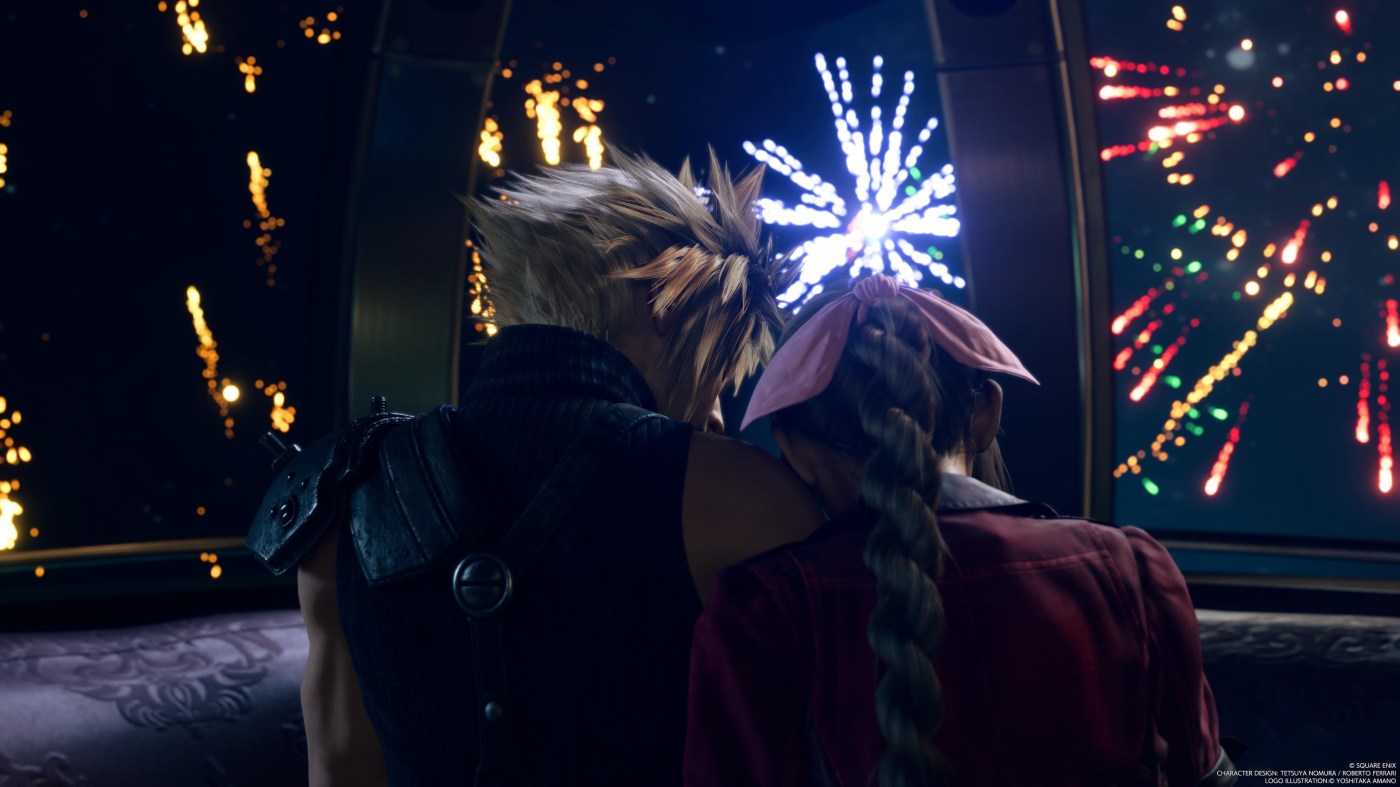
This review is written from the perspective of a newcomer who has never played the original Final Fantasy VII.
In writing about Final Fantasy VII Remake I believed the game hinted at a “spectacular adventure” to come, as Square Enix undertakes a bold retelling of the story of their 1997 classic across a new trilogy of games. Evidently the studio felt the same burgeoning potential when they decided to blow up the focused, linear design of Remake for a more sprawling multi-zone open-world adventure in Rebirth. Unfortunately, they forgot to compliment it with a compelling narrative that would make its 70-ish hours of runtime fully worth sitting through.
It’s not all bad—the combat in Rebirth is notably better than in Remake thanks in part to the game’s structure that allows you to have access to every party member for almost the entire journey. The music continues to be extraordinary and diverse, leaping between genres, dynamically transforming as you enter and leave combat, and playing with iconic motifs in fun and surprising ways. And, save for some occasional grungy-looking NPCs, it all looks quite excellent and is a far more visually resplendent game than Remake, which traded almost exclusively in dim warehouses, tunnels, and industrial slums.
But for every moment that Rebirth delighted me with a flashy boss battle or an oddly deep and complex minigame, there were also moments of frustration and tedium at the game’s repetitive open-world activities and frankly agonizing storytelling where large stretches of game pass by with very little happening narratively. There were just enough cool things happening here to pull me from the brink of calling it quits on Rebirth, but the fact that the game needed to be rescued from my shelf as often as it did was an increasingly worrying sign as my hour count grew higher and higher.
Let’s get Rebirth’s biggest pain point out of the way: the story is a complete wash.
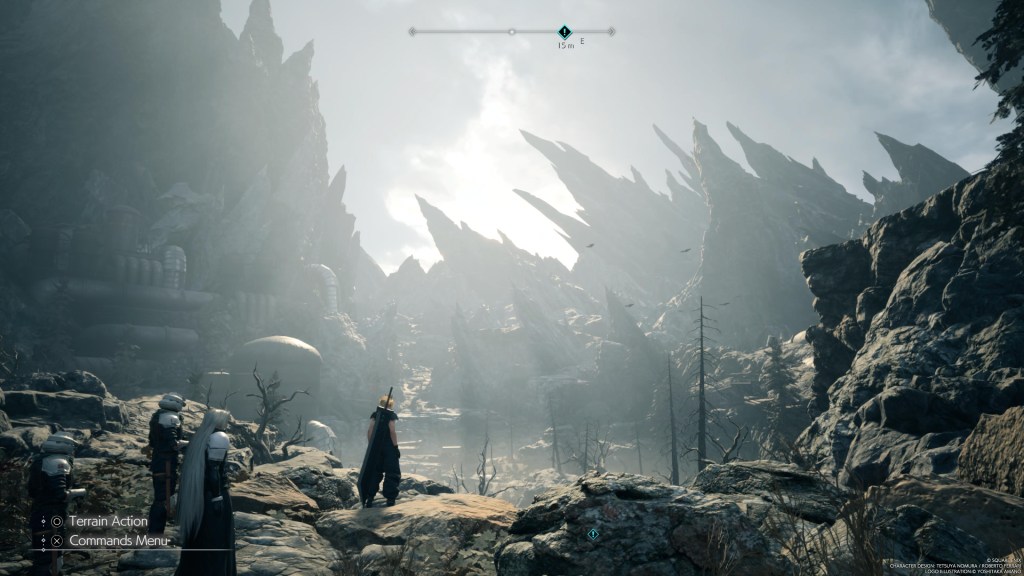
The most tiresome element in Remake were the glitchy Sephiroth visions, wherein the iconic silver-haired villain would appear to protagonist Cloud Strife, say something obscure, and then disappear to get ready for his next irksome appearance. These visions are practically the entire force driving the narrative in Rebirth; had I known this beforehand I would have gone into the game with milder anticipation.
You spend what feels like the first three quarters of Rebirth with a main quest to simply pursue some mysterious figures in black robes who have begun appearing and heading towards some destination, with the eventual hope of finding Sephiroth before he can carry out his video game villain business. You travel from region to region to see where the black robes may lead you next, gathering marginal amounts of information, and picking up a couple party members along the way: the excitable materia-craving Yuffie, who was previously playable in the Integrade DLC for Remake, and Cait Sith, a lovable Scottish tuxedo cat with a crown and a large moogle companion. Also joining you are Final Fantasy VII staples Barrett, Tifa, Aerith, and Red XIII. The whole gang is here.
It truly feels like nothing happens in Rebirth until the last few chapters of the game when it suddenly begins dumping heavy amounts of lore regarding the planet and Ancients and Whispers and Cetra, scores of proper nouns and weird timeline convergences that were all bewildering to have to parse and understand in the closing moments of a game I was ready to be done with by hour sixty. This is where I imagine having prior knowledge of Final Fantasy VII helps out. If you already know where this is all going you might be able to enjoy the ride a bit more. I found the newcomer perspective to put me at a real disadvantage when it comes to comprehending and enjoying the story this game is putting forth.

The final couple of chapters are particularly egregious when it comes to the Sephiroth visions—just moment after moment of the dude appearing and Cloud going “Sephiroth!”—and the overall dramatic flair that it treats its closing hours as if it had been building to a grand finale. Truthfully the game never felt like it was building to anything.
Things aren’t really saved by the side quests either, which are about as lacking in excitement as they were in Remake. The world of Final Fantasy VII is filled with goofy characters, running the gamut of NPCs in business casual attire to ranchers in Spirit Halloween cowboy getups. They’re often weird and charming, but they rarely give you exciting things to do. Once I realized most of these quests involved some kind of fetching, interacting with a minigame I didn’t want to revisit, or completing some kind of treasure hunt with a crudely-drawn reference map, I stopped trying to complete them.
The rest of the cast is thankfully still enjoyable, though without the tighter linear structure of the previous game it didn’t feel like they were given many moments to really shine. Tifa and Aerith and Barrett are an enchanting trio to be around, and the other three teammates bring their own flair to the proceedings as well. But Cloud begins to attain wet blanket status as the grouchy detached demeanor that I thought fit well in Remake continues to be his sole defining trait in Rebirth. I just want the guy to lighten up a bit already. How could you not in the presence of this party?
As if in acknowledgement that large portions of Rebirth’s story aren’t worth paying much attention to, the game lets you both skip and fast-forward cutscenes and—and!—even increase the speed of the fast-forwarding in the settings. If 1.5x speed isn’t getting you through those Sephiroth visions fast enough, try bumping it up to 2x!
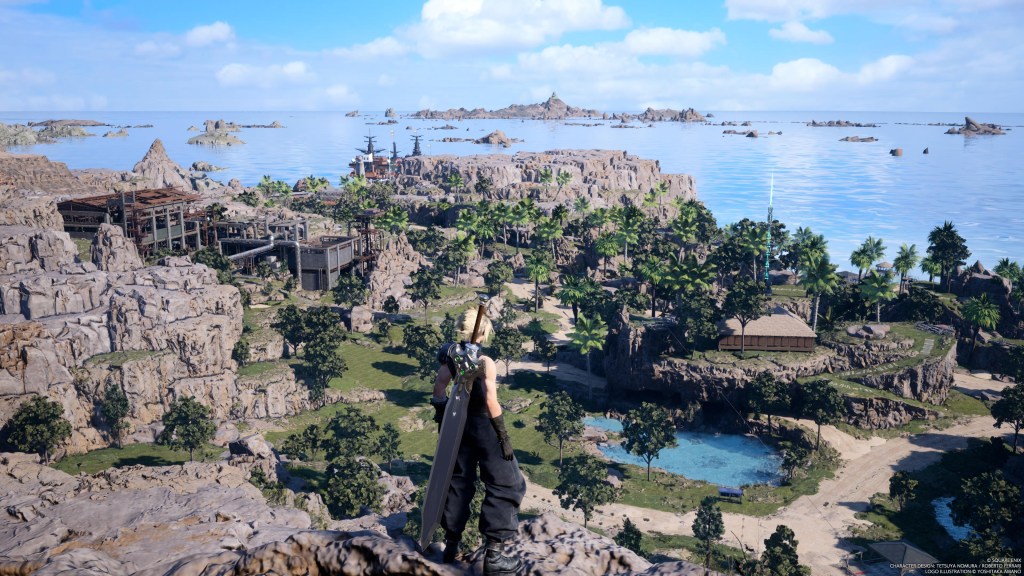
In spite of the game’s languid storytelling it is relieving to get out of the drab environs from Remake and explore other parts of the larger world of Final Fantasy VII. The game contains several zones with varying biomes, from rocky deserts to shoreside resorts and dense forests, offering a far greater variety of visuals than the previous game.
These zones are large and filled with repeatable activities, including the notorious Ubisoft towers that became a running joke of open-world games in the 2010s. There are combat challenges, silly Moogle round-em-ups, crafting recipes to dig out of the ground, world intel to collect, and summon stones to activate, with the effect of making the summons easier to defeat in combat and recruit to the campaign.
Getting around these spaces is mostly done on the backs of chocobos, which annoyingly must be acquired first in each zone. Some of these chocobo “recruitment” missions involve sneaking past other chocobos in some highly rigid and mechanical sequences that someone, impossibly, thought would be good inclusions to the game. They aren’t too challenging and they mercifully include checkpoints, though I gave up immediately on one late-game chocobo mission that required me to lure the bird past scary plants that would spook it and send the creature running back in the opposite direction. I don’t have time for that, man.
Rebirth’s regions look nice and have their own suite of musical themes, but some of them can be frustrating to navigate. A late-game desert region requires a lot of chocobo flying that can only be triggered in very specific spots, and it isn’t always clear how you’re supposed to reach the high ledges that map icons are sitting on. The worst is Gongaga, the game’s jungle region, where the pathways are choked by dense trees and foliage and the map does a terrible job indicating the routes you can take. I eventually gave up on trying to access an entire section of the map after failing to find the way through after much tedious searching.
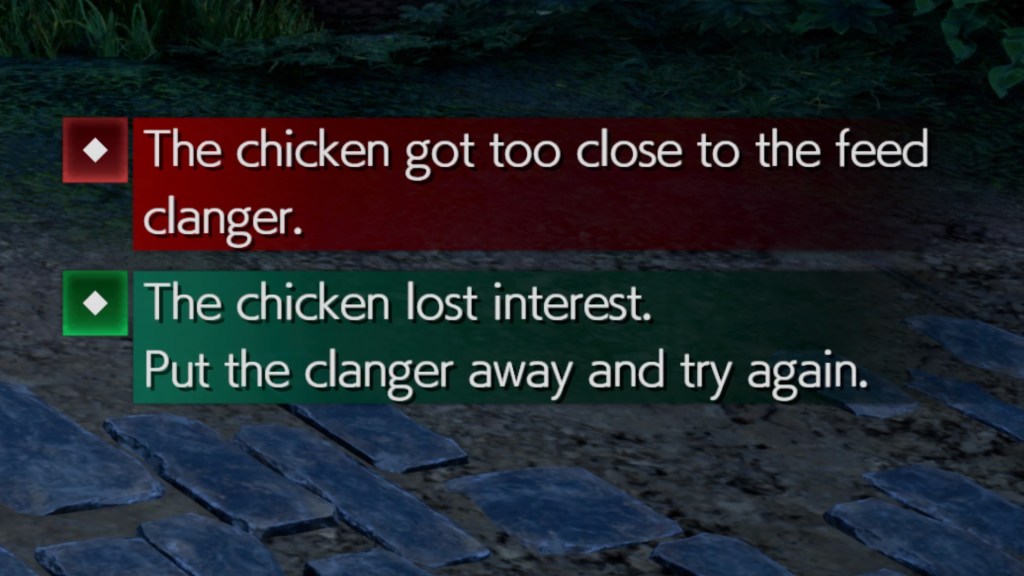
Also strewn throughout the game is an unbelievable number of bespoke minigames, ranging from a terrific Gwent-like card game to a tower defense thing to a mind numbing chicken-luring activity that’s used in one quest and thankfully never again. There’s even a Rocket League knockoff in which you run around as Red XIII and try to kick and headbutt balls into goals. Rebirth is always eager for you to do something different and I started laughing every time another minigame explainer popped up on screen. There’s a new activity buried this deep in the game with its own mechanics and tutorial? Oh my goodness. They aren’t all great, but I admire the breadth of stuff here (the card game really is quite fun, too).
Through it all, the best thing Rebirth has to offer is its combat. It’s just as flashy and exciting as it was the first time around, but with the benefit for keeping the party together for most of the game rather than constantly splitting people up. In Remake I found it hard to remember how to play certain characters when they would vanish from the story from long durations. No such problem in Rebirth; save for some specific story moments, everyone is available at all times to cycle in and out of your party.
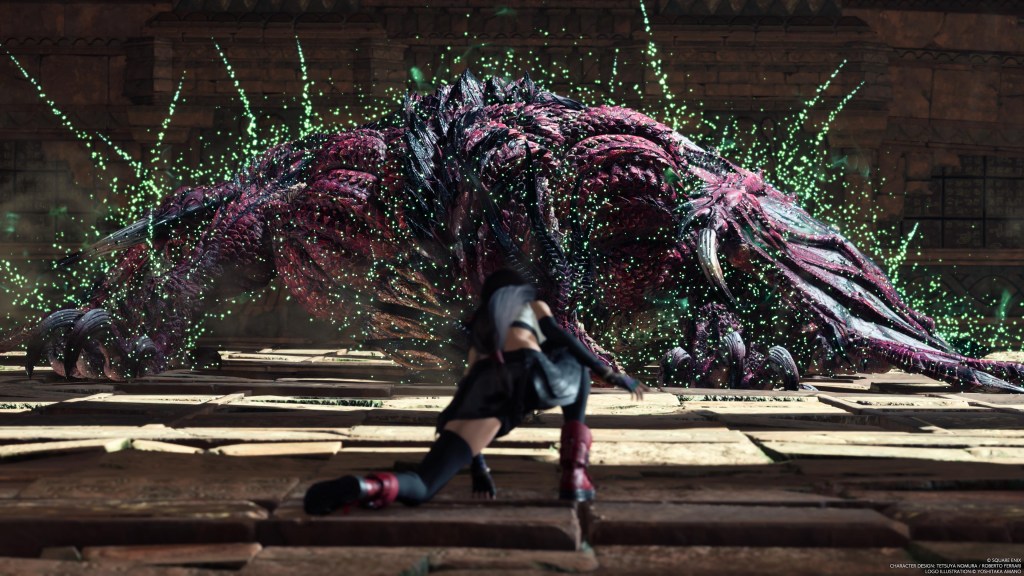
The game’s mashing-together of sort-of turn-based elements with real-time action can feel chaotic and messy, but when things are working in concert it’s a spectacle. Basic attacks fill up a character’s ATB meter, which is expended to launch spells, perform more advanced attacks, and use items. I love in equal measure the feeling of constantly building up to something powerful and the nerve-wracking anxiety of hoping to land a series of attacks so I can toss out a life-saving healing item at a critical moment.
You’re highly encouraged to take control of each party member during a fight because they don’t drive up their ATB meters much on their own, something that I had a hard time getting past in Remake but that I just accepted in Rebirth from the get-go. I had a much better time once I understood that I’m meant to play as everyone, rather than just sticking to Cloud exclusively. Each character fights quite differently, and playing to their strengths and unique capabilities makes battles—especially the longer ones—feel really dynamic and strategic.
Materia—the upgrades/spells/abilities that you slot into each character’s equipment—is easier to manage this time around thanks to the party sticking together. The game is also less punishing about missing critical materia for certain fights, giving everyone basic elemental attacks that cost zero MP that they can unleash to exploit weaknesses even if they don’t have the more powerful spell equivalent at their disposal. This is all in addition to other mechanics like synergy attacks and limit breaks that can swing the momentum of a fight, if you remember to use them. There’s a lot going on in Rebirth’s combat and many ways a battle can play out depending on the team composition.
It’s just so thrilling getting into fights in Final Fantasy VII, with the stunning animation quality and effects and extraordinary music that dynamically changes as you transition into and out of combat. Even when Rebirth’s story and open-world malaise were starting to break my spirit, I couldn’t bring myself to hang it up on the game early because I couldn’t get enough of this combat. The fights are flashy and challenging and the swelling of the score is some chill-inducing work.
The biggest shame of Rebirth is just that: the game has an obvious penchant for brilliant cinematic moments augmented by a killer soundtrack, but here it’s wasted on a story that is so uninteresting it started to become aggravating. The combat makes good use of the dynamic and lively cast where the story and open-world design do not. One particular boss fight near the end contains a sequence in which each member of the team gets in a blow to defeat the opponent and it’s the single most awesome and riveting moment of the game. Too bad it was only thirty seconds of a seventy hour adventure.
 Nate Andrews
Leave a comment